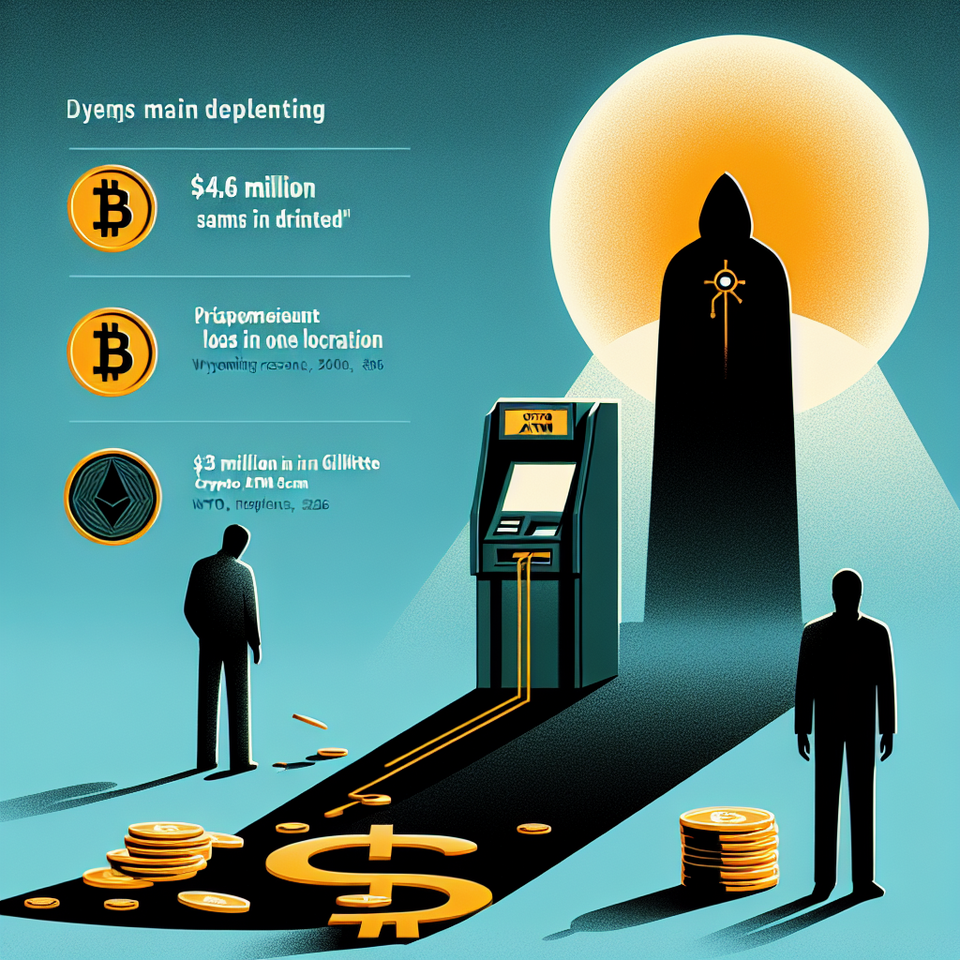
**Crypto ATM Scams Drain Millions from Wyoming Residents in 2026**
Key Takeaways:
- Over $4.6 million has been lost in crypto ATM scams across Wyoming’s major cities.
- Gillette alone accounts for $3 million in reported scam-related losses involving the machines.
- Law enforcement urges legislative action to regulate crypto ATM usage statewide.
Gillette, WY — The term “crypto ATM” is trending after a disturbing spike in scams involving these machines has reportedly siphoned more than $4.6 million from residents across Wyoming’s largest cities. In Gillette alone, local police say criminals have managed to extract approximately $3 million in fraudulent schemes using the devices.
Crypto ATMs: A Growing Tool in Criminal Schemes
Wyoming law enforcement agencies are warning that an increasing number of scammers are directing victims—often elderly or vulnerable individuals—toward crypto ATMs to facilitate the instant and irreversible transfer of funds via cryptocurrency. These machines, which look like standard ATMs but operate using digital currencies like Bitcoin, have become the latest instrument in a long-evolving series of fraud techniques.
According to Cheyenne Police Sgt. Kevin Malatesta, while the tactics used by scammers have similarities to older fraud methods such as prepaid gift card scams, the choice of tool has changed. “It’s just the means of currency…shifted from gift cards or checks to these Bitcoin ATMs,” he said. Critics argue this change has made scams both easier to execute and harder to trace.
In Cheyenne alone, crypto ATM scams accounted for at least $600,000 in losses in 2025. Statewide, an informal count from AARP estimates that Wyoming has at least 45 crypto ATMs, with 11 in Cheyenne and more expected to be installed as the popularity of cryptocurrency rises.
Why the Spike Now? The Shift from Traditional to Digital Fraud
The increasing reliance on crypto ATMs by fraudsters is attributed to their effectiveness as unmonitored financial exits. Unlike traditional banks, crypto ATMs do not require human oversight, such as trained tellers who might question suspicious transactions. This lack of intervention gives scammers free rein.
Victims are often kept on the phone during the entire crypto transaction, ensuring they remain emotionally manipulated and do not stop to question the situation. In one extraordinary case, a scammer sent someone to the victim’s home to collect mailed cash and gold bars. Another involved a taxi being sent to re-establish contact with a victim whose number had been changed by family to block the scammers.
“Once [victims] put that money into a wallet… it’s gone,” said Sheridan Police Officer Liz Shafer, who reported $1.5 million in losses in her region over the past two years. “Getting that money back—I have seen zero success stories on that front.” Most of the scammers are operating internationally, making legal recourse incredibly difficult due to lack of jurisdiction and stretched federal resources.
Calls for Regulation and Protective Measures
With the alarming rise in crypto ATM-facilitated fraud, law enforcement officials are now urging lawmakers to pass regulations that would implement daily transaction limits and visible fraud warnings on the machines. Detective Alan Stuber of Gillette has been in discussions with legislators about policy changes to curb these types of scams.
Campbell County Representative Ken Clouston has proposed legislation that would require crypto ATMs to comply with state banking regulations. This could include more extensive Know Your Customer (KYC) protocols, fee transparency, and mandatory warning screens reminding users of potential fraud scenarios.
The legislation is seen as a crucial step, especially given the high number of annual fraud reports — approximately 75 to 100 cases per year — that local police departments currently process in Gillette alone. The urgency is heightened by the fact that most of these scams go underreported or involve amounts that don’t meet the federal investigative threshold.
Frequently Asked Questions
Q: Why is crypto atm trending?
A: An ongoing wave of crypto ATM-related scams across Wyoming has led to over $4.6 million in losses, prompting public concern and calls for state regulation.
Q: What happens next?
A: Wyoming lawmakers are preparing to introduce a bill that will regulate crypto ATMs, possibly limiting transactions and requiring fraud warnings. The bill is expected to be formally submitted in the upcoming legislative session.
#CryptoATMScam