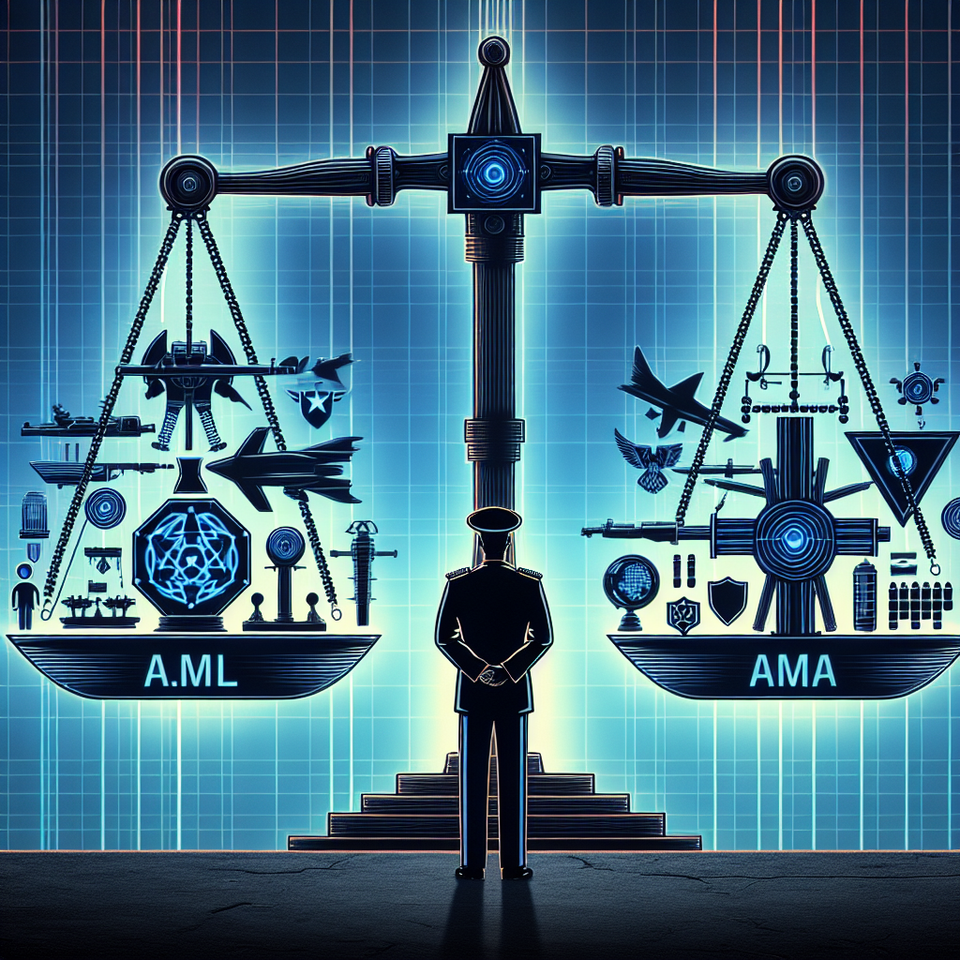
**The Great AI Arms Race: U.S. Lags in Control Over Military AI Systems**
Key Takeaways:
- Retired Major General Robert F. Dees warns that US military power hinges on control over AI technology.
- Disagreement between the US military and tech firm Anthropic over AI usage exposes a lack of control and transparency.
- China advances aggressively in military AI, leveraging open-source models with fewer governance constraints.
Washington, D.C. — Major concerns arise over the United States’ ability to control and manage advanced artificial intelligence (AI) in a military context in the wake of a standoff between tech company Anthropic and the Pentagon.
Private Tech Firms vs Pentagon: Battle of Control Over AI
The core issue revolves around a dispute between Anthropic, developers of advanced AI systems, and the Pentagon. Anthropic sought to impose limits on how its AI technology could be used in a military context, while the Pentagon insisted on retaining the ability to use AI tools for all lawful purposes. The failure to reconcile these positions led to Anthropic being designated a supply chain risk, prompting the Department of War to search for AI tech elsewhere.
Under the Spotlight: The AI Ecosystem and National Defense
The standoff acts as a warning, exposing how the existing structure of America’s AI ecosystem, driven by private entities, is fundamentally misaligned with the requirements of national defense. Private companies retain the reins over the training, testing, and development of complex AI models, leading to a dangerous dynamic where the most consequential technologies of our time could be limited by unaccountable private entities.
A Look Beyond Borders: China’s Flexibility with AI Systems
In contrast, competitor nations like China are rapidly building flexible and adaptable AI systems. Chinese AI systems like DeepSeek are not held back by corporate governance constraints in the same way as American AI tech. As they are designed for rapid modifications and integrations, they serve a broad ecosystem that includes China’s military and an expanding network of international partners.
The Future of AI in US Military: A Call for New Approach
The United States must tackle these challenges head-on. Rather than relying on access to closed, proprietary systems, the United States should invest in the development of adaptable open-source AI models that can be controlled, audited, and deployed by the government and its allies. Dees suggests various strategic moves the government could make, such as government-led model development, collaborations with trusted research institutions, and new procurement strategies that prioritize transparency.
Frequently Asked Questions
Q: Why is the AI arms race trending?
A: The AI arms race is trending due to increasing concerns over the US government’s control over AI technology in the military sector and escalating competition from nations like China.
Q: What happens next?
A: The United States may have to reconsider its approach to incorporating AI into its military strategy, potentially shifting towards open-source, adaptable AI models that it can control fully.
#ArtificialIntelligence #USAIPolicy #TechWar #AIInMilitary #USChinaCompetition