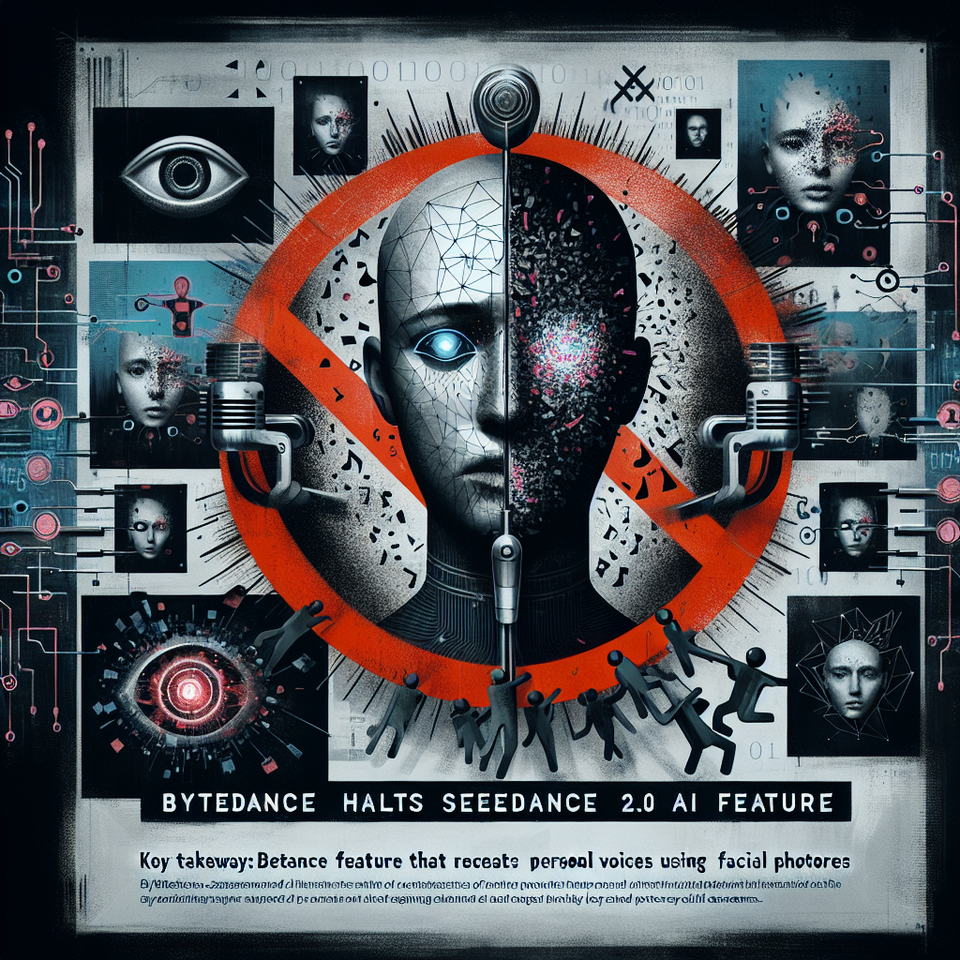
**ByteDance Halts Controversial Seedance 2.0 AI Feature Over Deepfake Fears**
Key Takeaways:
- ByteDance suspends Seedance 2.0 feature that can recreate personal voices using only facial photos.
- Privacy and ethical concerns triggered swift suspension after reports of unauthorized voice cloning.
- New identity verification and content controls announced as Seedance 2.0 remains in internal testing.
Beijing — ByteDance’s cutting-edge AI video model Seedance 2.0 is trending after the company urgently suspended a controversial voice-generation feature. The decision follows public alarm over the tool’s ability to generate audio nearly identical to a person’s real voice based solely on facial images—without access to samples or consent.
AI Voice Synthesis from Images Sparks Outcry
Seedance 2.0, developed by TikTok parent company ByteDance, uses a dual-branch diffusion transformer to generate high-resolution video and audio from user-provided input. The feature that made headlines this week allows the system to mimic a person’s voice using only a photo—raising concerns about AI-enabled identity theft and voice forgery.
A recent test by Pan Tianhong, founder of tech media outlet MediaStorm, revealed that uploading a photo of his face led the model to produce a voice clip disturbingly close to his own. The model had no access to his vocal recordings. This experiment, when made public, ignited a wave of fear that such technology could be exploited for creating fake news videos, impersonation scams, and reputational sabotage.
ByteDance responded on Monday by announcing an “urgent suspension” of the feature through its Jimeng app, the China-facing version of Seedance 2.0. Company representatives said they were removing the ability to use real-human-like images or videos as avatar references and implementing stricter content verification processes.
How Seedance’s Capabilities Crossed A Line
Seedance 2.0 impressed the AI community with its ability to create 60-second, multi-shot, 2K-resolution videos from a single text input or image. Its standout innovation was generating synchronized visual content and natural-sounding audio in one system. The tool parses narrative structure and maintains character consistency automatically, which made it an attractive solution for short dramas, animations, and promotional content.
However, these same features have triggered critical scrutiny. By synthesizing a voice just from a facial image, the software appears to rely on machine learning models trained extensively on voice-to-facial pattern datasets, likely extrapolated from massive data sources. This approach has alarming implications for data privacy and digital rights, especially when deployed without user consent or with minimal regulation.
In a statement cited by Sina Tech, ByteDance stated: “To maintain a healthy and sustainable creative environment, we are making urgent changes based on user feedback and will not allow real-human-like photos or videos to be used as reference subjects.”
ByteDance Tightens Controls to Mitigate Damage
In response to escalating backlash, ByteDance introduced a live user verification step across its Jimeng and Doubao platforms. This now requires users to voluntarily record both their image and voice before creating a digital avatar. The company stressed these measures were necessary to “uphold responsibility” while continuing to innovate safely.
Seedance 2.0 remains in internal testing. ByteDance has signaled no intention of retracting the product entirely but is working to limit dangerously realistic impersonation features. The tech giant has also strengthened internal review procedures and imposed tighter controls over how image-based input is used.
Observers note this step reflects broader tensions in AI development worldwide, where rapid innovation often outpaces ethics and legislation. Increased scrutiny from regulators on deepfake content—especially in the wake of global election cycles and youth-targeted tech—is expected to place further pressure on AI startups and established tech companies alike.
What This Means for AI Creativity and Regulation
Seedance 2.0’s temporary suspension highlights a growing debate: how to enable rich, AI-enhanced content creation while guarding against misuse. ByteDance may intend the platform primarily for short-form storytelling, but unregulated use of realistic avatars and voices poses real-world risks to privacy, identity, and trust.
Nearly every major AI provider, including OpenAI, Meta, and Google, has faced questions about how their tools might enable deepfakes or misinformation. China’s government has already implemented stricter rules on synthetic media, and the Seedance incident may prompt further regulatory tightening around generative applications.
Despite the concerns, tech commentators remain cautiously optimistic about Seedance’s creative potential, particularly for localized film production, education, and marketing. But future rollouts will need strong identity protections, transparent consent processes, and watermarking to ensure responsible deployment.
Frequently Asked Questions
Q: Why is Seedance 2.0 trending?
A: ByteDance suspended a controversial feature of its AI model that could recreate a person’s voice using only facial photos, sparking viral concern over privacy and deepfakes.
Q: What happens next?
A: ByteDance is continuing internal testing of Seedance 2.0, implementing stricter security controls. A public release is on hold pending safety evaluations and user verification upgrades.
#Seedance2 #ByteDanceAI #DeepfakeAlert #AIethics #PrivacyMatters