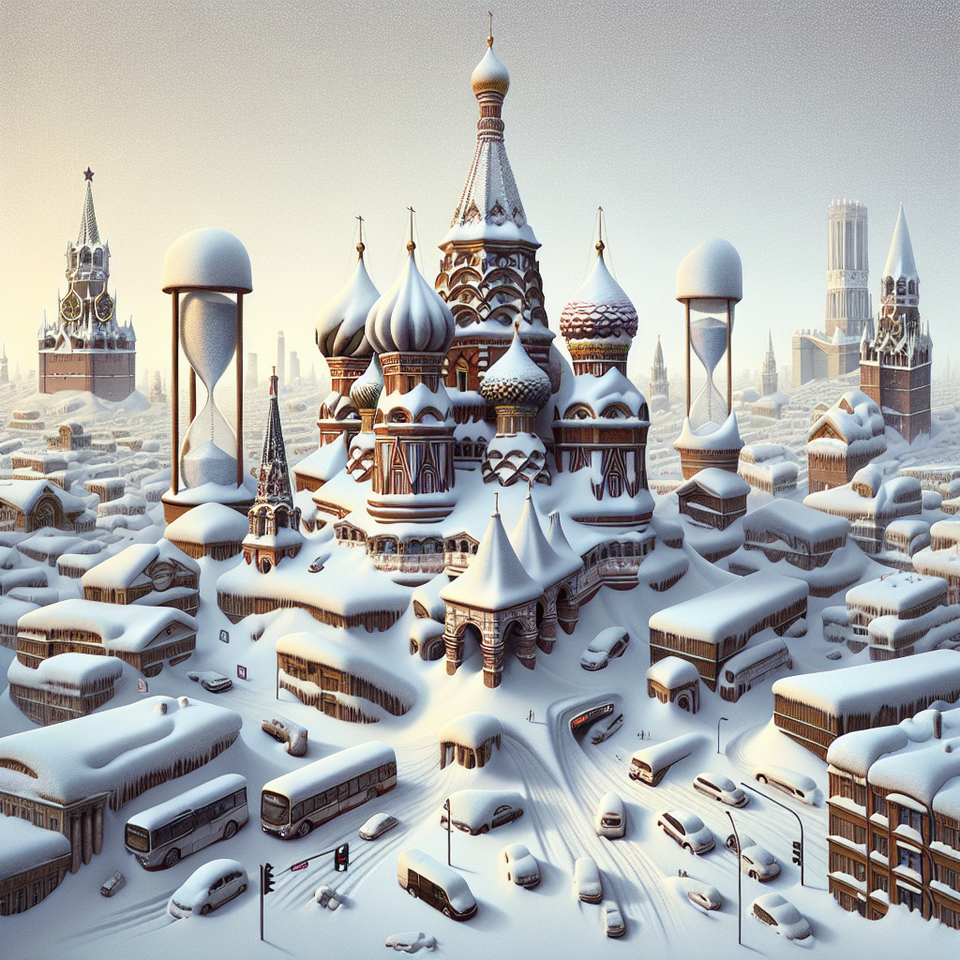
**Moscow Buried Under Record Snowfall, Worst in Over 200 Years**
Key Takeaways:
- Moscow recorded its heaviest snowfall since 1821, with 92 mm of precipitation this January.
- Heavy snowfall disrupted transport and caused severe delays across the Russian capital.
- Unusual weather patterns, triggered by powerful cyclones, are to blame for the extreme event.
Moscow — Russia’s capital has recorded its heaviest snowfall in over two centuries, with weather officials confirming the event as the most snow Moscow has seen in 203 years. The dramatic weather has ground parts of the city to a halt, causing major commuting disruptions and sparking online reactions as snowdrifts reached visual landmarks.
Historic Snowfall Paralyzes the Capital
Moscow State University’s Meteorological Observatory announced on Thursday that the capital recorded nearly 92 mm of precipitation by January 29 — the most since records began in 1821. Snow accumulation reached up to 60 cm in parts of the city, affecting the daily movement of over 13 million residents.
Photos and videos widely shared online show residents trudging through thick snow in central Moscow, while car traffic has been significantly delayed and commuter trains stalled. On Thursday, vehicles moved at a crawl on major arteries as plows attempted to keep pace with the falling snow.
“January was a cold and unusually snowy month in Moscow,” said the observatory via social media. The snowstorm’s longevity and intensity overwhelmed maintenance crews and triggered emergency response coordination across the city.
Extreme Weather Fueled by Persistent Cyclonic Activity
The extreme snowfall resulted from what meteorologists called “deep and extensive cyclones with sharp atmospheric fronts.” These massive weather systems brought sustained snow dumps both to central Russia and other far-reaching regions, such as Kamchatka in the Far East, where an emergency was declared earlier in the month.
The rising trend in unusual weather aligns with broader climate anomalies observed across Eurasia. Scientists have noted shifts in precipitation patterns and increasing frequency of polar jet stream disruptions. While severe winters are not rare in Russia, the increasing unpredictability and intensity suggest longer-term climate volatility coming into sharper view.
Interestingly, some residents have taken the event with a dose of nostalgia. “There used to be much more snow,” said Pavel, a 35-year-old bartender speaking to AFP. “Now we practically don’t have any. This almost feels like old times.” Pavel’s sentiment refers to anecdotal reports that recent winters have been milder compared to Soviet-era norms.
Urban Infrastructure Faces Renewed Climate Challenges
This event has raised concerns about the Russian capital’s ability to cope with severe weather as climate patterns continue to shift. Moscow’s public services, while seasoned in snow removal, are not often tested against events of this magnitude. City officials issued multiple weather advisories during the week and deployed emergency equipment to support public transportation and road clearance.
The impact goes beyond transport. With many relying on street vending, manual labor, or ride-hailing jobs, such snowstorms create significant economic interruptions, especially for gig workers who cannot operate in such conditions. Furthermore, questions are emerging about long-term urban planning strategies and how resilient the Russian capital’s infrastructure truly is amid evolving meteorological realities.
Frequently Asked Questions
Q: Why is snowfall trending?
A: Moscow experienced its heaviest snowfall in more than 200 years, disrupting life in one of Europe’s largest cities and highlighting extreme weather trends.
Q: What happens next?
A: Meteorological agencies are monitoring upcoming cold fronts in the region, while city services continue cleanup. Snowfall is expected to ease next week.
#MoscowSnow #Snowstorm2024 #ClimateAlert #ExtremeWeather #RussiaWeather