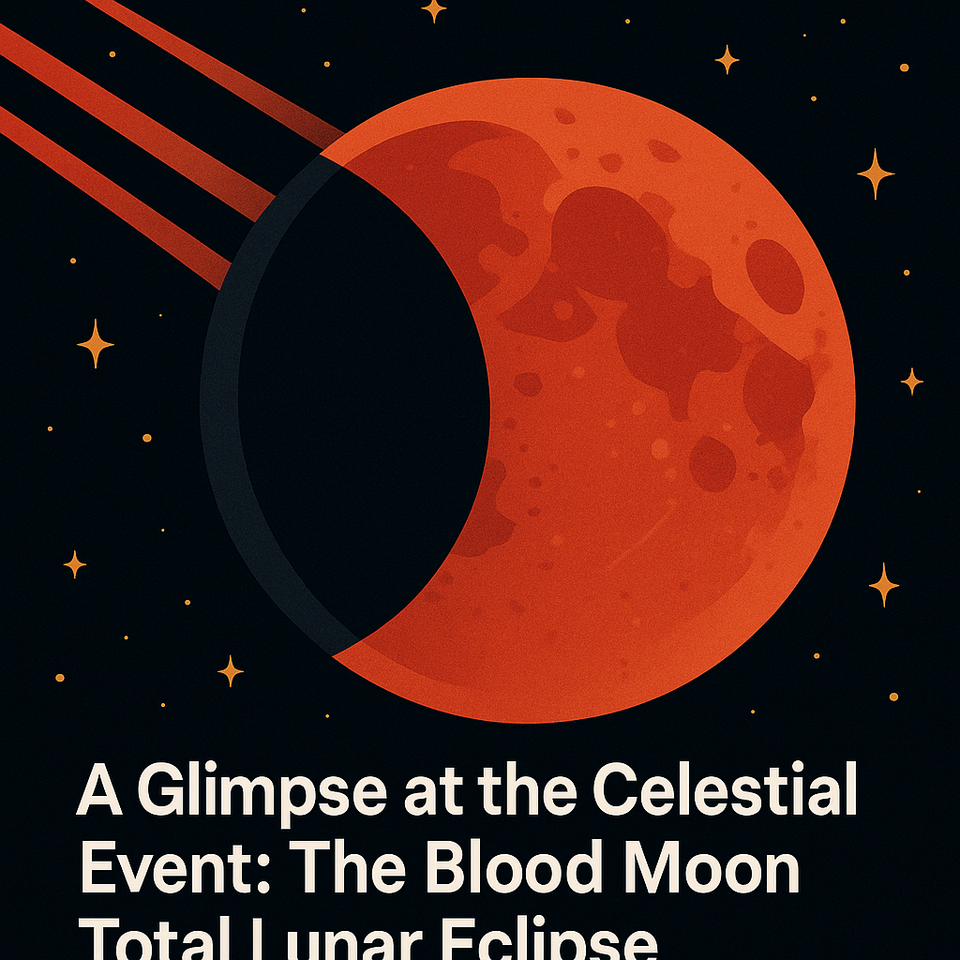
**A Glimpse at the Celestial Event: The Blood Moon Total Lunar Eclipse**
Key Takeaways:
- A near-total lunar eclipse, also known as a blood moon, is to take place on the night of August 27–28.
- The moon will be 96% covered by Earth’s shadow, offering a magnificent view.
- The next significant lunar eclipse for the Americas will not occur until the total lunar eclipse of June 26, 2029.
Global — The astronomical world is abuzz as the moon is set to adorn the skies in shades of red and orange during the upcoming deep partial lunar eclipse or blood moon, scheduled for August 27–28.
Unlocking the Lunar Splendor
An astronomical event – a near-total lunar eclipse, leads to a blood moon scenario when the Earth’s shadow obscures most (96%) of the moon. It’s an alignment play where the Sun, Earth, and Moon come into near-perfect alignment, allowing the full moon to slip into Earth’s umbral shadow. These mechanics result in the moon glowing like a smoldering sunset, incredibly enchanting, while the remaining 4% of the moon that is not obscured casts a silver effect on the northern limb.
Historical Views on Lunar Eclipses
Lunar eclipses, especially those of a magnitude as high as 96%, have historically been subject to various interpretations and cultural beliefs. Many ancient civilizations associated such celestial occurrences with omens and forebodings. For instance, the ancient Babylonians predicted the eclipses and associated them with the death of a king. They installed a “substitute king” during the eclipse as a counter-measure to foil the negative consequences.
Global Visibility and Implication
The upcoming blood moon will be visible through most of the Americas except Hawaii and parts of Alaska. Africa and Europe will witness the lunar magic during the early hours of August 28. This deep partial eclipse comes nearly three years after the last one, making it an appealing event for skywatchers and astronomy enthusiasts globally. However, the grand scale of it hints that the next lunar eclipse of such magnitude won’t occur again for the Americas until 2029, adding significant value to its observance this time around.
Frequently Asked Questions
Q: Why is the ‘blood moon total lunar eclipse’ trending?
A: The upcoming deep partial lunar eclipse or ‘blood moon’ event, set for August 27–28, is causing excitement in astronomy circles and the larger public, leading to it becoming a trending topic.
Q: What happens next?
A: People across most parts of the Americas, Africa, and Europe will be able to observe the near-total lunar eclipse, after which stargazers will have to wait until the total lunar eclipse of June 26, 2029, for a similar spectacle.
#LunarEclipse #BloodMoon #MoonGazing #AstronomyNews #CelestialEvent